Skip to content

Ballerinas: Barre Work
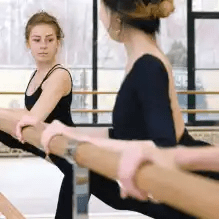
You will find a “barre” in most ballet studios. Ballerinas hold on to this handrail to support them while they practice positions. The barre can be permanently attached to the walls or freestanding so that it can be moved into position and cleared away to free up central floor space. Barres are used extensively in ballet training and warm up exercises. Such exercises are commonly referred to as “barre work”. Even experienced ballerinas do barre work at the start of each class. Barre work prepares the ballerina for dancing during the second part of the class. It establishes correct placement, and it develops core and leg strength.

There are also barre workout classes that use a combination of postures inspired by ballet, yoga and Pilates. In these classes, the barre is used as a prop to balance while doing exercises for isometric strength training. Beverly

A Ballerina Book: “Ballerina Rosie”

“Ballerina Rosie” is written by Sarah Ferguson, The Duchess of York, and illustrated by Caldecott Honor artist Diane Goode. This is a picture book about Rosie, who loves to dance. Her mother decides it is time for Rosie to begin ballet school. When Rosie starts ballet classes, she learns that it not only takes practice and hard work but also self-confidence.

I loved this book. It was a little long but told a great story about dreams and working hard to make those dreams successful. My favorite part though was when Rosie demonstrated her version of a few ballet moves. The illustrator brought Rosie to life with her drawings and the author with her words. Beverly

Ballerinas: Pas de bourrée

Pas de bourrée is a classical ballet term meaning “beating steps”. It takes its name from a 17th century French dance called bourrée. It is a transitional movement in ballet in which the dancer transfers body weight quickly from foot to foot. It is usually executed on the points of the toes and has three quick little steps in the middle of the move that must be fitted into one count of music.

There are many different pas de bourrée. The name of each one tells the dancer how to move her feet. For example, in pas de bourrée derriére, the dancer closes the same foot behind her every time and in pas de bourrée piqué, the dancer picks up or lifts her legs. The pas de bourrée is also a very common step in jazz dance and is used for transitions or traveling. Beverly

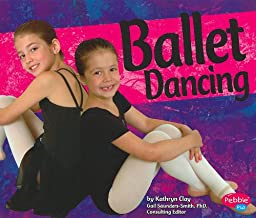
A Ballerina Book: “Ballet Dancing”

“Ballet Dancing” by Kathryn Clay was published by Capstone Press in 2010. It is a Pebble Plus “Dance, Dance, Dance” book.

This book is filled with photo images of ballet dancers instead of illustrations. “Ballet Dancing” is a cute, hardcover book that tells all about ballet: what to wear, the five positions of ballet, ballet moves and even a glossary at the back of the book that explains ballet terms. It is geared to early readers and children who are 4–8 years old. I loved seeing all the ballet words throughout the book. Beverly

Ballerinas: Clothes and Hairstyles

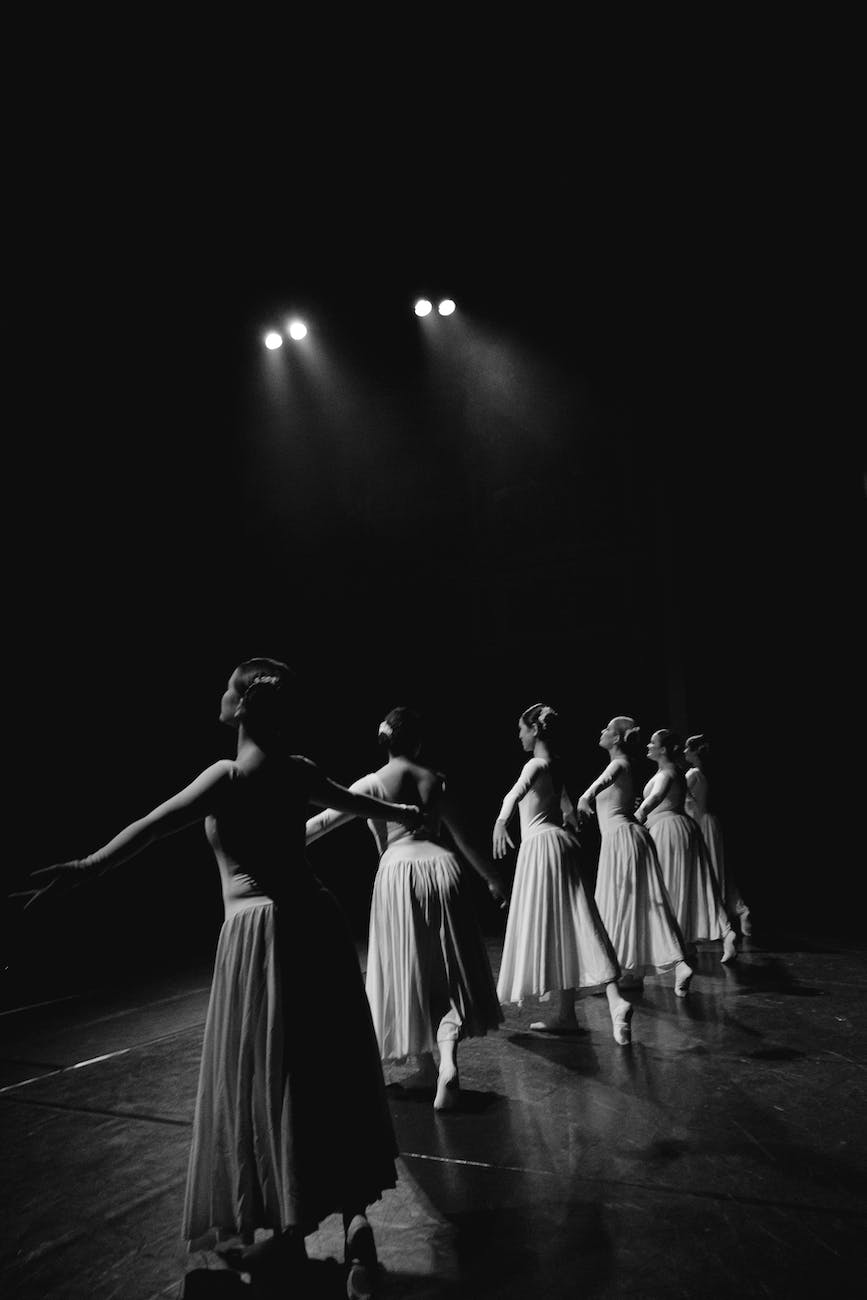
Photo by Gustavo Fring on Pexels.com

The first step in becoming a ballerina is the right clothes and hairstyle. The budding ballerina will need a leotard (a simple short sleeve leotard or a tank leotard), ballet tights and a tutu. She will also need ballet shoes. Ballet shoes can be made of leather or satin and should fit good. For beginners, leather sole ballet slippers are great. When ready to go on pointe, the ballerina will need proper pointe shoes. It is helpful to pack all this up in a dance bag. Some other things to put in the bag are a towel, water bottle and a small, healthy snack.

The young ballerina will probably be required to wear her hair in a ballet hairstyle. This consists of either a ponytail twisted into a bun, pigtail braids pinned on top of the head or even a headband around their head. These hairstyles help keep the hair out of their face, which is very important when performing their ballet moves. Beverly

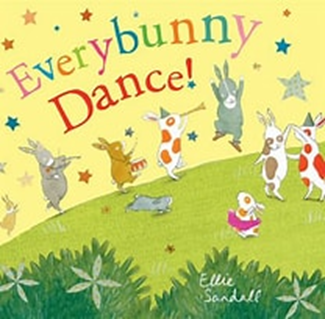
A Ballerina Book: “Everybunny Dance!”

“Everybunny Dance!” is a children’s picture book written and illustrated by Ellie Sandall. It was published in 2017 by Margaret K. McElderry Books, Simon & Schuster.

This is a cute bunny story about “everybunny” dancing: “run and jump and dance and play, all together, every day!” It is a rhyming story with detailed, beautiful illustrations. The words may be sparse on some of the pages, but I do love the sprinkle of ballet words. Beverly

Ballerinas: Performance Styles of Ballet

Performance style refers to how the work is presented on the stage. A genre or style can help to give a dancer a framework to shape the devised work. For a ballerina’s performance style, she may vary the way she moves (for example: her pas de chat may be light and quick or her glissade may be small and sharp). She may also change her head and body positions with different steps or dance exactly with the music and change the mood of her steps as the music changes.

There are three main styles of ballet: classical (based on traditional ballet techniques with an emphasis on mime to tell the story to the audience and which requires tutus and pointe shoes), neoclassical (usually abstract with sometimes no clear plot, costumes or scenery and has an emphasis on pure dance) and contemporary (this genre of dance incorporates elements of classical ballet and modern dance and has classical ballet techniques but allows greater range of movement of the upper body). These three ballet styles have many similarities, but the way they are performed and the technical aspect of each are quite different. Beverly

My Triplet Ballerinas: “A Triplet Inspiration”

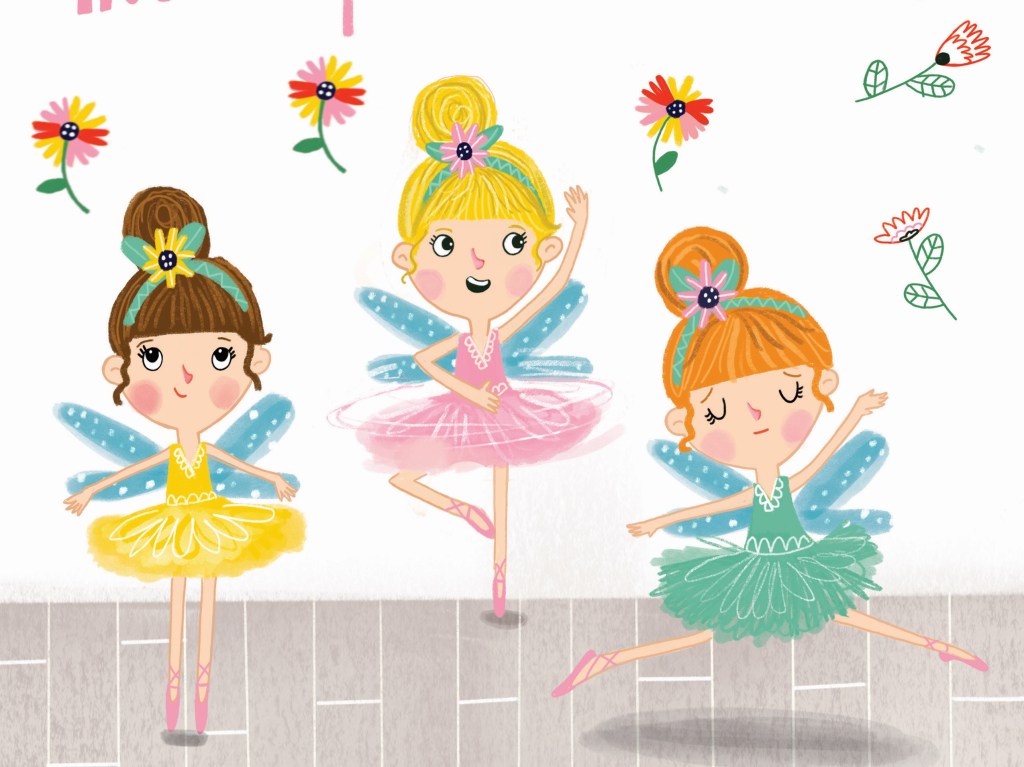
My triplet ballerinas are my triplet grand-daughters, Makenna, Jaeli and Maysie. It was very easy to dedicate “The Triplet Ballerinas” to them. The dedication says, “For my triplet granddaughters, Makenna, Jaeli and Maysie, who inspire me each and every day“. This is so true.

When I started writing a children’s book almost 7 years ago, I had no idea what to write about. After a dog came to our house one Fall day, lost from a hunter, I thought maybe this would be a good story for a picture book. I couldn’t make that story work, but then I was inspired with writing about the triplets. “Write what you know.” The earliest versions of “The Triplet Ballerinas” involved horse poop(!) and only one triplet as a main character since that’s what I thought there could only be. Thanks to a terrific author critique I received though, my one triplet main character became three triplet main characters and it evolved from there.

Back then, the triplets were of an age (around 6 or 7 years old) that they would have really enjoyed reading and sharing this picture book. Even though, by the time the book was published, they had left picture books behind and entered chapter books, they still love that I wrote a picture book inspired by them and dedicated to them. Beverly

Edit

My Triplet Ballerinas…Characteristics

My triplet ballerinas are my triplet grand-daughters, Makenna, Jaeli and Maysie.

One of the things you have to do when writing a story is give character traits (words used to describe a person) to your characters. For my first blog post of “My Triplet Ballerinas”, I decided to compare the character traits I gave to my “pretend” triplet ballerinas to the ones of their counterparts, my own triplet ballerinas.

“Annie” is spirited and fearless. She is very confident in her abilities. I have a feeling she might be bossy too! Makenna is intelligent (she is very smart and studious) and creative (her drawings and ideas are so good). She is always curious (wanting to know about everything). She can be stubborn (at times), but she is always helpful (whenever she sees someone in need, she will help them without being asked).  

“Julie” is determined and hardworking. I think she can be self-critical, but never critical of her sisters. She might be a bit of a perfectionist too! Jaeli can also be self-critical at times. She could also be described as being shy (something she struggles with especially in making friends). She loves to read so solitary might be a word to describe her. Some other words to describe her would be: loving, sensitive and hopeful.

“Macie” is shy and timid. She is also uncertain, but hopeful. She is definitely a follower, not a leader! Maysie is very imaginative (she is always coming up with great ideas like writing a story!). She is the spirited and fearless triplet. Some other words to describe her would be: kind-hearted and fashionable (she loves to “dress up”).

Beverly

A Ballerina Book: “Princess! Fairy! Ballerina!”

“Princess! Fairy! Ballerina!” is a children’s picture book written and illustrated by Bethanie Deeney Murguia. It was published in 2016 by Arthur A. Levine Books, an imprint of Scholastic Inc.

This is a cute story about three friends who gather on a rainy day to figure out what they want to do. It is told from the point of view of all three friends. One wants to play “princess” because they are royal. One wants to play “fairy” because fairy dust means magic spells. One wants to play “ballerina” because ballerinas can be beautiful snowflakes or graceful swans. The illustrations in this book are so detailed and beautiful. Beverly